 Speed Readingo
Sobre o Speed Readingo
O Speed Readingo é um app de treino de leitura dinâmica e memória para iPhone e Android, criado pela Fastemy. Este site reúne as ferramentas e aulas grátis do app em português, inglês, espanhol, alemão e turco.

O app
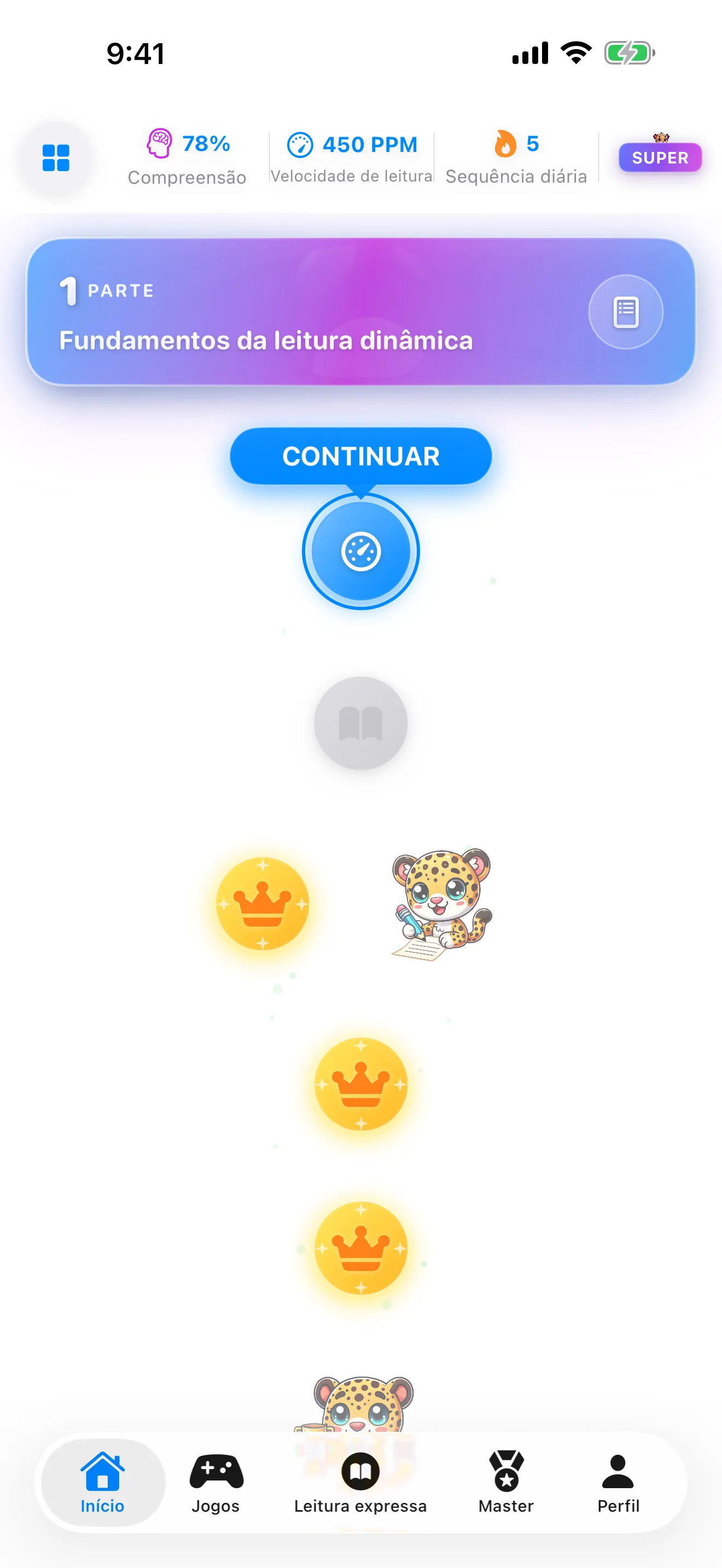
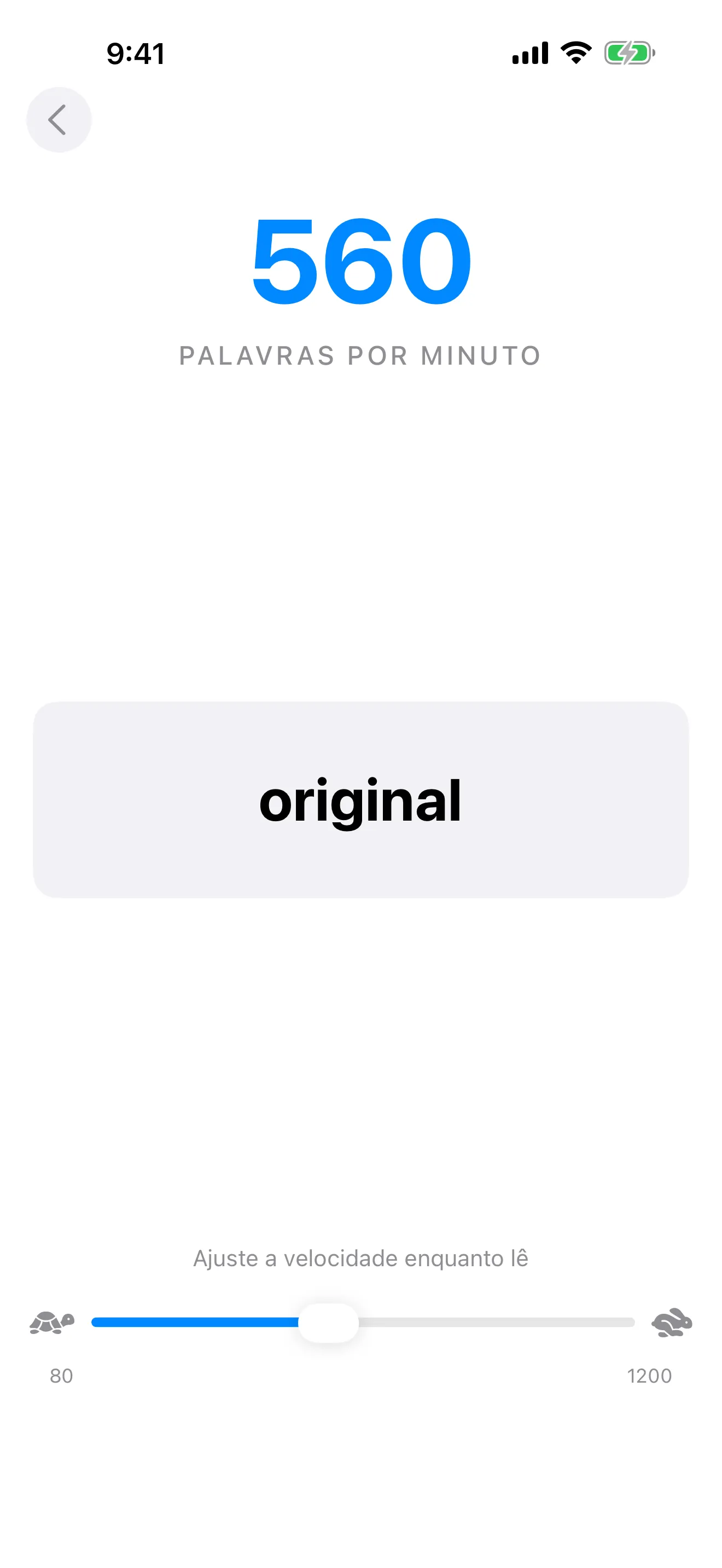
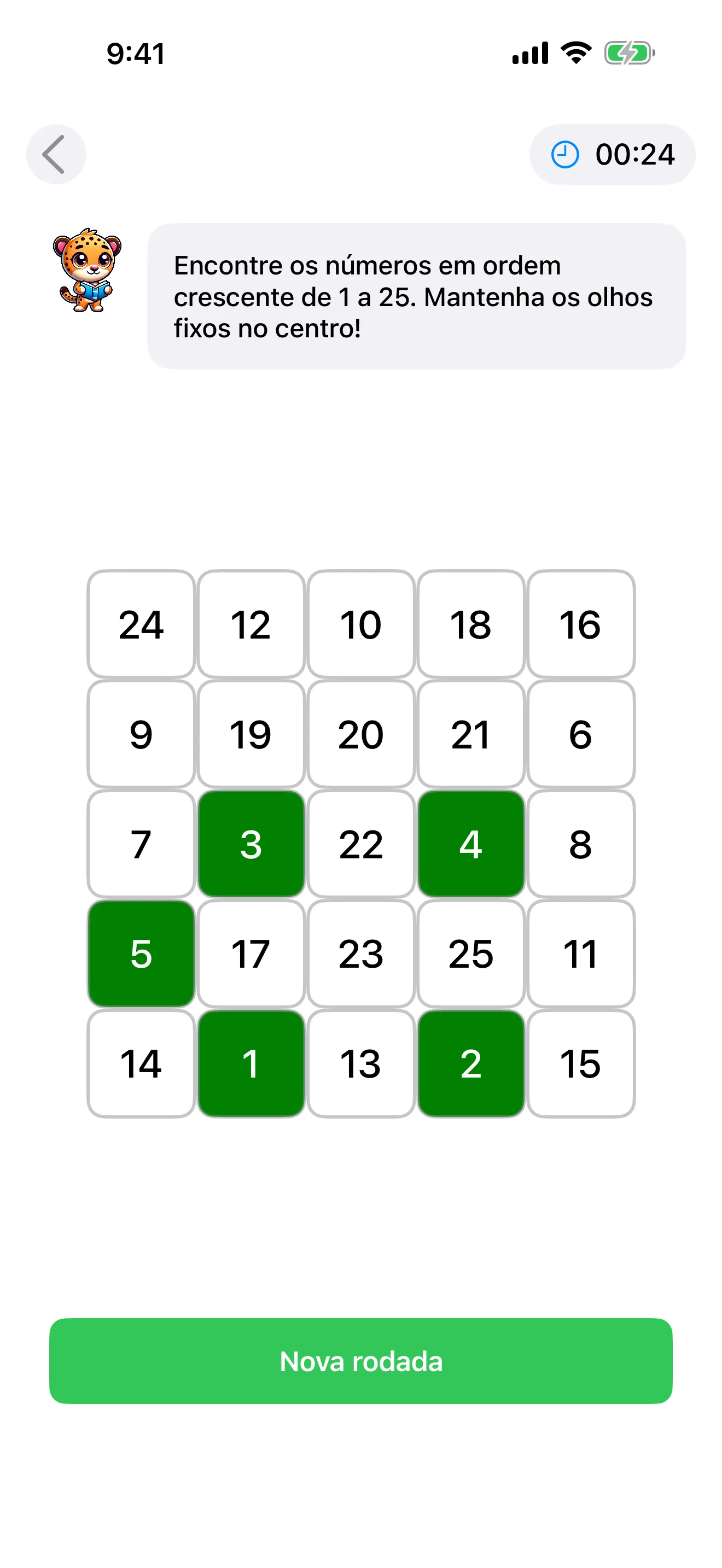
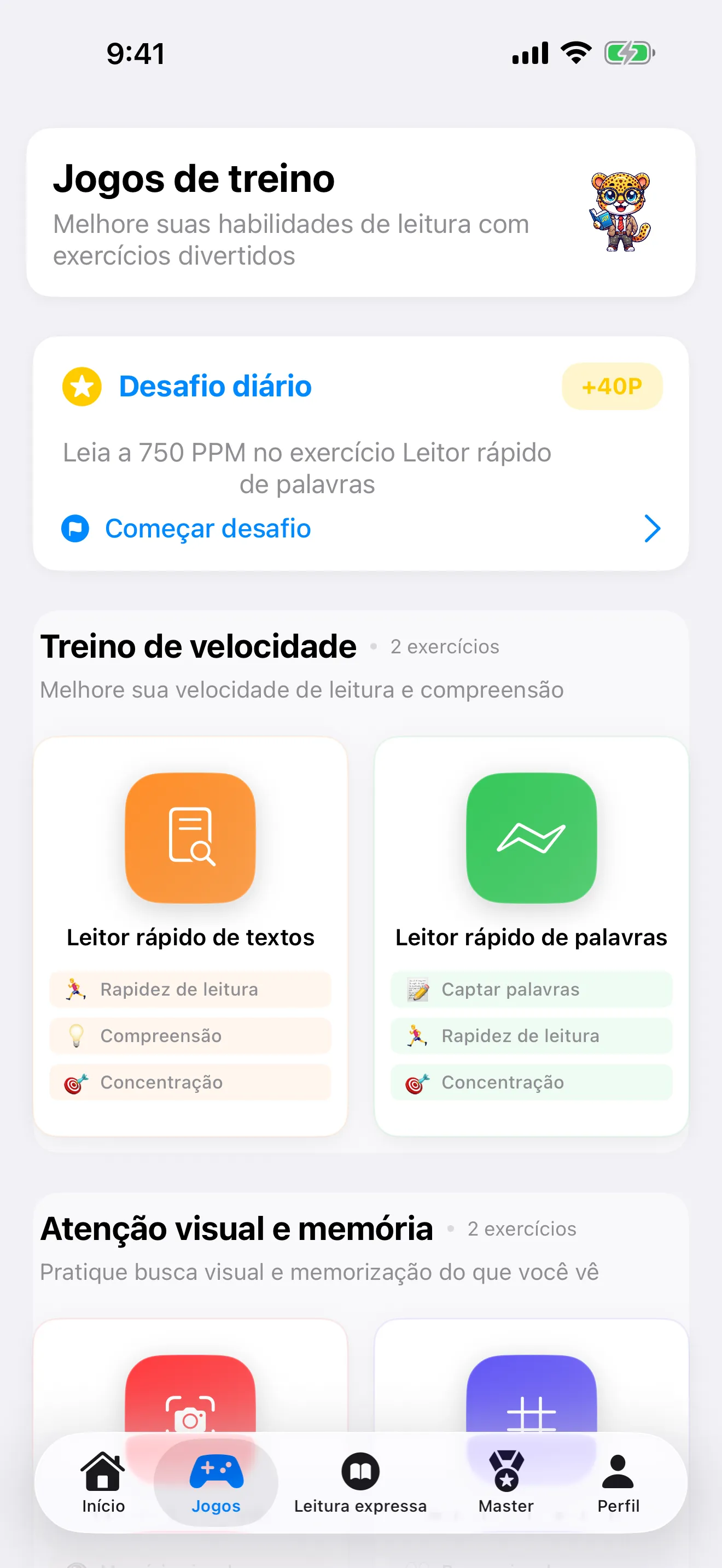
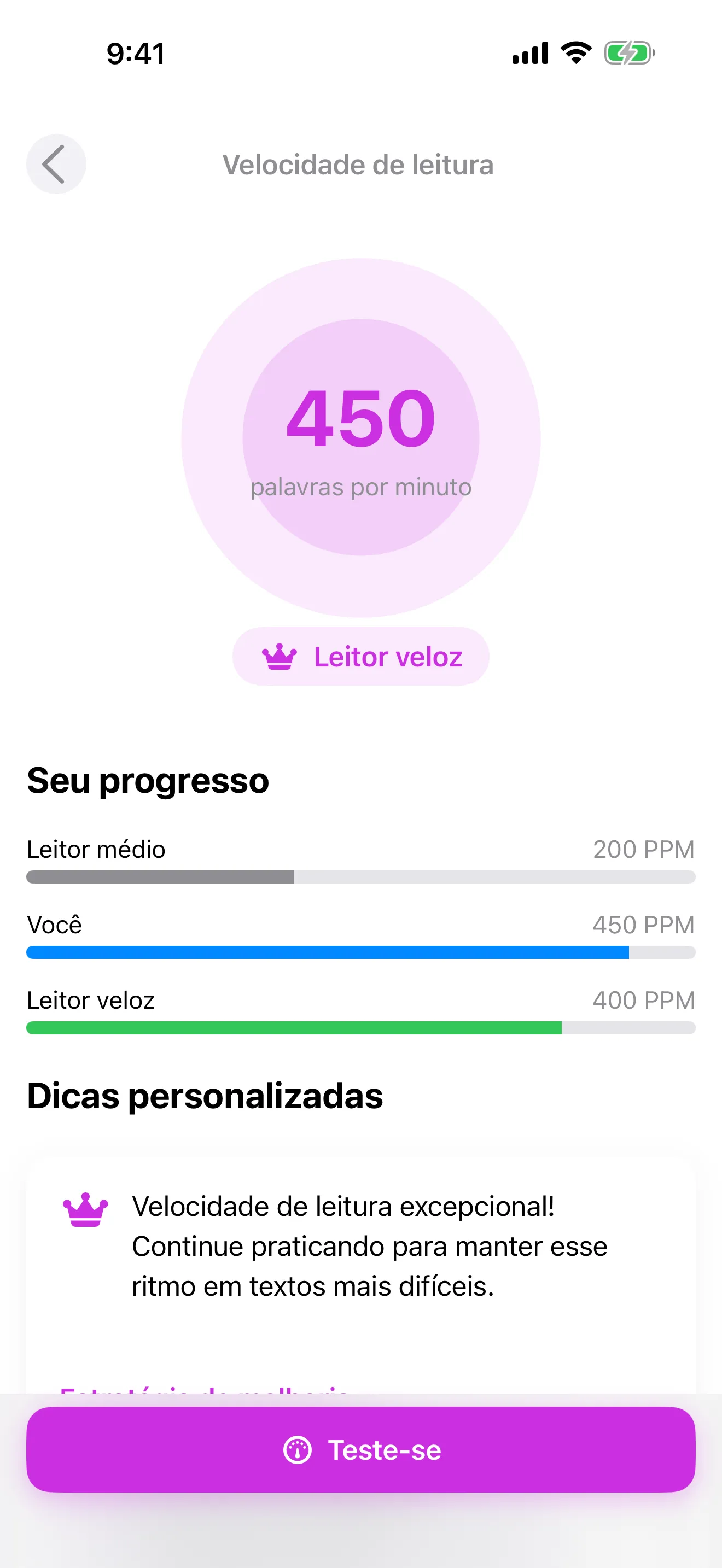
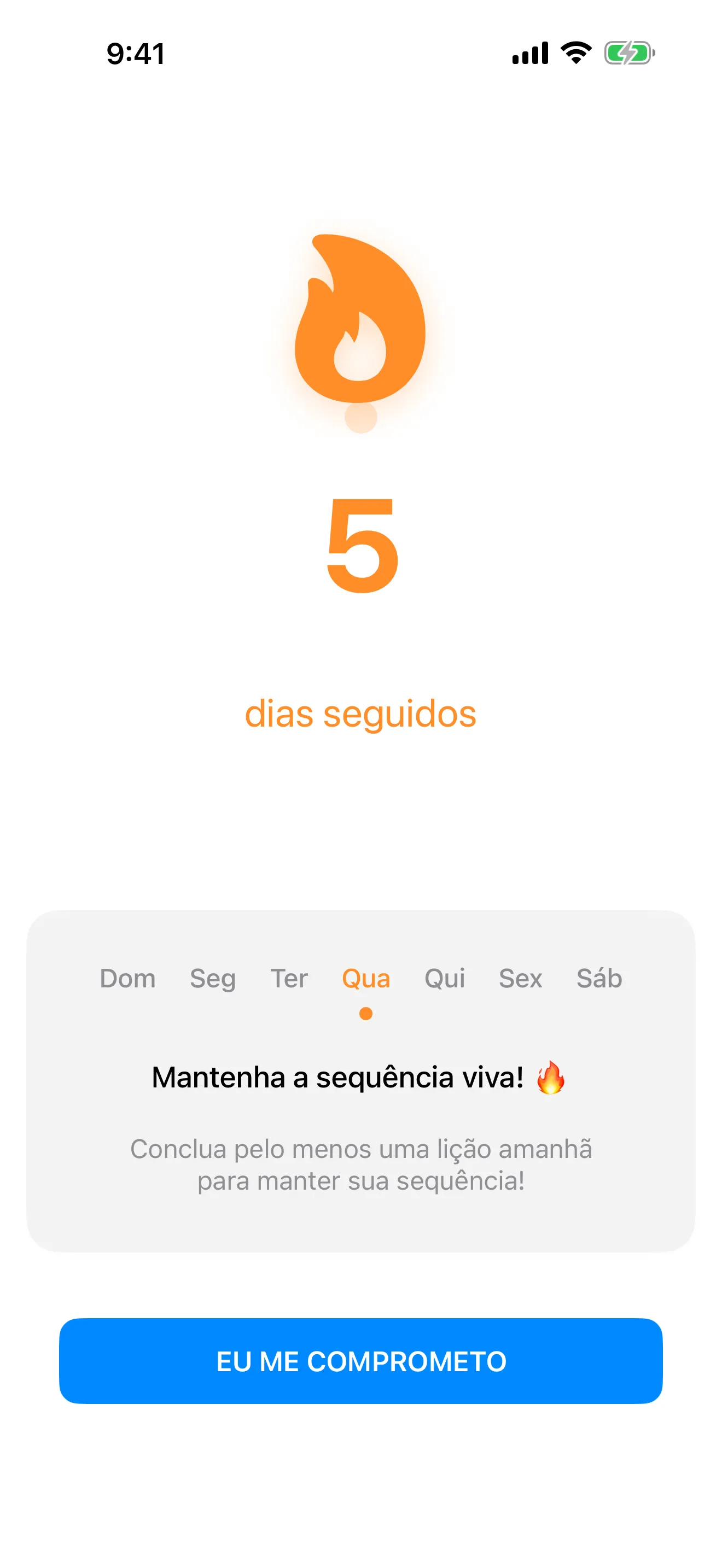
O app transforma o método numa rotina diária: uma trilha de aulas, exercícios RSVP de até 1.200 palavras por minuto, tabelas de Schulte, jogos de memória e uma sequência diária. O download é grátis, com uma assinatura Premium opcional dentro do app.
Na App Store do Brasil ele aparece como “Speed Reading & Memory Trainer”; na tela inicial, o nome é simplesmente Speed Readingo.
O autor

Abdullah Yılmaz · Instrutor de leitura dinâmica · Fundador da Fastemy
Abdullah Yılmaz criou o Speed Readingo e ensina leitura dinâmica e técnicas de memorização. Seu curso em turco na Udemy já chegou a mais de 49.000 alunos desde 2018, com nota 4,6 em mais de 10.500 avaliações. As aulas deste site seguem o mesmo método, adaptado para a web e para o app.
Técnicas de leitura dinâmica e memória: aprenda como um gênio (49.126 · 4,6★ · 10.519) · fastemy.com · LinkedIn · X · YouTube
O método
As aulas seguem o curso que Abdullah Yılmaz ensina desde 2018: três passos (pré-leitura, ler com os olhos e marcação), praticados em sessões diárias curtas. Cada aula mostra o método junto com o que a pesquisa diz sobre ele, inclusive onde as evidências são fracas.
Como tratamos os números
- Cada número das aulas, dos guias e das ferramentas vem de uma pesquisa publicada ou de uma fonte oficial e é citado na página, com a população estudada e o ano.
- Quando a pesquisa contradiz uma afirmação comum sobre leitura dinâmica, dizemos isso, mesmo que a afirmação seja popular.
- Nosso teste de velocidade de leitura mostra a compreensão ao lado da velocidade e sinaliza resultados abaixo de 70% de acertos, porque velocidade sem compreensão é só passar o olho.
- Resultados em português são comparados apenas com dados de leitores de português: a mesma ideia ocupa um número diferente de palavras em cada língua.
- Como não existe uma média medida de leitura silenciosa para adultos brasileiros, não publicamos esse número.
Fontes que citamos
- Acartürk, C., Özkan, A., Pekçetin, T. N., Ormanoğlu, Z., & Kırkıcı, B. (2024). TURead: An eye movement dataset of Turkish reading. Behavior Research Methods, 56(3), 1793–1816.
- Acklin, D., & Papesh, M. H. (2017). Modern speed-reading apps do not foster reading comprehension. American Journal of Psychology, 130(2), 183–199.
- ACX (Audible) (2025). Narrate an audiobook: how long will my narrated audiobook be?. ACX Help Center.
- Association for Psychological Science (2016). Speed reading: report and commentary (Rayner et al., with D. A. Balota). psychologicalscience.org.
- Benedetto, S., Carbone, A., Pedrotti, M., Le Fevre, K., Bey, L. A. Y., & Baccino, T. (2015). Rapid serial visual presentation in reading: The case of Spritz. Computers in Human Behavior, 45, 352–358.
- Brysbaert, M. (2019). How many words do we read per minute? A review and meta-analysis of reading rate. Journal of Memory and Language, 109, 104047.
- Callender, A. A., & McDaniel, M. A. (2009). The limited benefits of rereading educational texts. Contemporary Educational Psychology, 34(1), 30–41.
- Carabba, F., Borsati, C., Fontana, G., Altieri, E., Vicovaro, M., & Battaglini, L. (2026). Probing the use of visual search as a tool to enhance reading speed. Attention, Perception, & Psychophysics, 88(7), 190.
- Carver, R. P. (1985). How good are some of the world’s best readers?. Reading Research Quarterly, 20(4), 389–419.
- Cepeda, N. J., Pashler, H., Vul, E., Wixted, J. T., & Rohrer, D. (2006). Distributed practice in verbal recall tasks: A review and quantitative synthesis. Psychological Bulletin, 132(3), 354–380.
- Cepeda, N. J., Vul, E., Rohrer, D., Wixted, J. T., & Pashler, H. (2008). Spacing effects in learning: A temporal ridgeline of optimal retention. Psychological Science, 19(11), 1095–1102.
- Clinton-Lisell, V. (2022). Listening ears or reading eyes: A meta-analysis of reading and listening comprehension comparisons. Review of Educational Research, 92(4), 543–582.
- Clinton-Lisell, V. (2023). Does reading while listening to text improve comprehension compared to reading only? A systematic review and meta-analysis. Educational Research: Theory and Practice, 34(3), 133–155.
- Coşkun, E. (2007). Lise öğrencilerinin okuma hızı ve anlama düzeyleri üzerine bir araştırma. Milli Eğitim, 172, 29–39.
- Dresler, M., Shirer, W. R., Konrad, B. N., et al. (2017). Mnemonic training reshapes brain networks to support superior memory. Neuron, 93(5), 1227–1235.
- Duggan, G. B., & Payne, S. J. (2009). Text skimming: The process and effectiveness of foraging through text under time pressure. Journal of Experimental Psychology: Applied, 15(3), 228–242.
- Dunlosky, J., Rawson, K. A., Marsh, E. J., Nathan, M. J., & Willingham, D. T. (2013). Improving students’ learning with effective learning techniques. Psychological Science in the Public Interest, 14(1), 4–58.
- Durukan, E. (2014). Metinlerin okunabilirlik düzeyleri ile öğrencilerin okuma becerileri arasındaki ilişki. Ana Dili Eğitimi Dergisi, 2(3).
- Erden, G., Kurdoğlu, F., & Uslu, R. (2002). İlköğretim okullarına devam eden Türk çocuklarının sınıf düzeylerine göre okuma hızı ve yazım hataları normlarının geliştirilmesi. Türk Psikiyatri Dergisi, 13(1), 5–13.
- Gordon, C. L., Lysecky, R., & Vahid, F. (2023). Less is more: Students skim lengthy online textbooks. IEEE Transactions on Education, 66(2), 123–129.
- Graves, M. F., et al. (1983). Effects of previewing difficult short stories on low ability junior high school students’ comprehension, recall, and attitudes. Reading Research Quarterly.
- Greenlees, I., Thelwell, R., & Holder, T. (2006). Examining the efficacy of the concentration grid exercise as a concentration enhancement exercise. Psychology of Sport and Exercise, 7(1), 29–39.
- HandWiki (n.d.). Schulte table. handwiki.org.
- Hoffman, J. V., & O’Neal, S. F. (1979). An investigation into the internal and external rate flexibility of proficient readers in relation to the difficulty level of the material. ERIC ED192288.
- Kasson, S. C. (2012). Which study method works best? A comparison of SOAR and SQ3R for text learning. Master’s thesis, University of Nebraska–Lincoln.
- King-Shepard, Q. W., Walker, J., Nokes-Malach, T. J., Carpenter, S. K., & Fraundorf, S. H. (2025). The effect of prequestions on learning: A multilevel meta-analysis. Educational Psychology Review, 37(4), 115.
- Kuperman, V., & Van Dyke, J. A. (2011). Effects of individual differences in verbal skills on eye-movement patterns during sentence reading. Journal of Memory and Language, 65(1), 42–73.
- Lu, A., Wang, D., He, S., Zhongcheng, Q., Zhang, W., & Li, Z. (2022). Attention mechanisms underlying dual-color digital visual search based on Schulte grid: An event-related potential study. Brain and Behavior, 12(2), e2471.
- McDaniel, M. A., Howard, D. C., & Einstein, G. O. (2009). The read-recite-review study strategy: Effective and portable. Psychological Science, 20(4), 516–522.
- McNamara, D. S. (2000). Preliminary analysis of PhotoReading. NASA Ames Research Center (report NAG2-1319).
- MEB (2026). Sınavla Öğrenci Alacak Ortaöğretim Kurumlarına İlişkin Merkezî Sınav Başvuru ve Uygulama Kılavuzu. Millî Eğitim Bakanlığı.
- Mol, S. E., & Bus, A. G. (2011). To read or not to read: A meta-analysis of print exposure from infancy to early adulthood. Psychological Bulletin, 137(2), 267–296.
- Murphy, D. H., Hoover, K. M., & Castel, A. D. (2023). The effect of video playback speed on learning and mind-wandering in younger and older adults. Memory.
- Murphy, D. H., Hoover, K. M., Agadzhanyan, K., Kuehn, J. C., & Castel, A. D. (2022). Learning in double time: The effect of lecture video speed on immediate and delayed comprehension. Applied Cognitive Psychology, 36(1), 69–82.
- ÖSYM (2026). YKS maratonunda ilk oturum sona erdi (TYT: 120 soru, 165 dakika). osym.gov.tr.
- ÖSYM (2026). 2026-YKS sıkça sorulan sorular. ÖSYM.
- ÖSYM (2026). 2026 KPSS Kılavuzu (Lisans). ÖSYM.
- Perrone-Bertolotti, M., et al. (2012). How silent is silent reading? Intracerebral evidence for top-down activation of temporal voice areas during reading. Journal of Neuroscience, 32(49), 17554–17562.
- Ponce, H. R., Mayer, R. E., & Méndez, E. E. (2022). Effects of learner-generated highlighting and instructor-provided highlighting on learning from text: A meta-analysis. Educational Psychology Review, 34(2), 989–1024.
- Rayner, K. (2009). Eye movements and attention in reading, scene perception, and visual search. Quarterly Journal of Experimental Psychology, 62(8), 1457–1506.
- Rayner, K., Schotter, E. R., Masson, M. E. J., Potter, M. C., & Treiman, R. (2016). So much to read, so little time: How do we read, and can speed reading help?. Psychological Science in the Public Interest, 17(1), 4–34.
- Recht, D. R., & Leslie, L. (1988). Effect of prior knowledge on good and poor readers’ memory of text. Journal of Educational Psychology.
- Robinson, F. P. (1946). Effective study (revised edition). Harper & Brothers, New York.
- Rogowsky, B. A., Calhoun, B. M., & Tallal, P. (2016). Does modality matter? The effects of reading, listening, and dual modality on comprehension. SAGE Open, 6(3).
- Schotter, E. R., Tran, R., & Rayner, K. (2014). Don’t believe what you read (only once): Comprehension is supported by regressions during reading. Psychological Science, 25(6), 1218–1226.
- Snyder, V. (1984). Effects of study techniques on developmental college students’ retention of textbook chapters. Conference paper, ERIC ED243363.
- Trauzettel-Klosinski, S., Dietz, K., & the IReST Study Group (2012). Standardized assessment of reading performance: The new International Reading Speed Texts IReST. Investigative Ophthalmology & Visual Science, 53(9), 5452–5461.
- Twomey, C., & Kroneisen, M. (2021). The effectiveness of the loci method as a mnemonic device: Meta-analysis. Quarterly Journal of Experimental Psychology, 74(8), 1317–1326.
- Varao Sousa, T. L., Carriere, J. S. A., & Smilek, D. (2013). The way we encounter reading material influences how frequently we mind wander. Frontiers in Psychology, 4, 892.
- Weinstein, Y., McDermott, K. B., & Roediger, H. L. (2010). A comparison of study strategies for passages: Rereading, answering questions, and generating questions. Journal of Experimental Psychology: Applied, 16(3), 308–316.
- Yalçın, A., Çeltik, S. E., & Altınok, Ş. (2017). Hukuk fakültesi öğrencilerinin hızlı okuma becerilerinin değerlendirilmesi. Ahi Evran Üniversitesi Kırşehir Eğitim Fakültesi Dergisi, 18(3), 100–114.
- Yang, C., Luo, L., Vadillo, M. A., Yu, R., & Shanks, D. R. (2021). Testing (quizzing) boosts classroom learning: A systematic and meta-analytic review. Psychological Bulletin, 147(4), 399–435.
- Yıldırım, K., Rasinski, T., & Kaya, D. (2017). Fluency and comprehension of expository texts in Turkish students in grades four through eight. Eğitim ve Bilim, 42(192), 87–98.
Contato
Encontrou um erro ou uma fonte melhor? Escreva para contact@fastemy.com